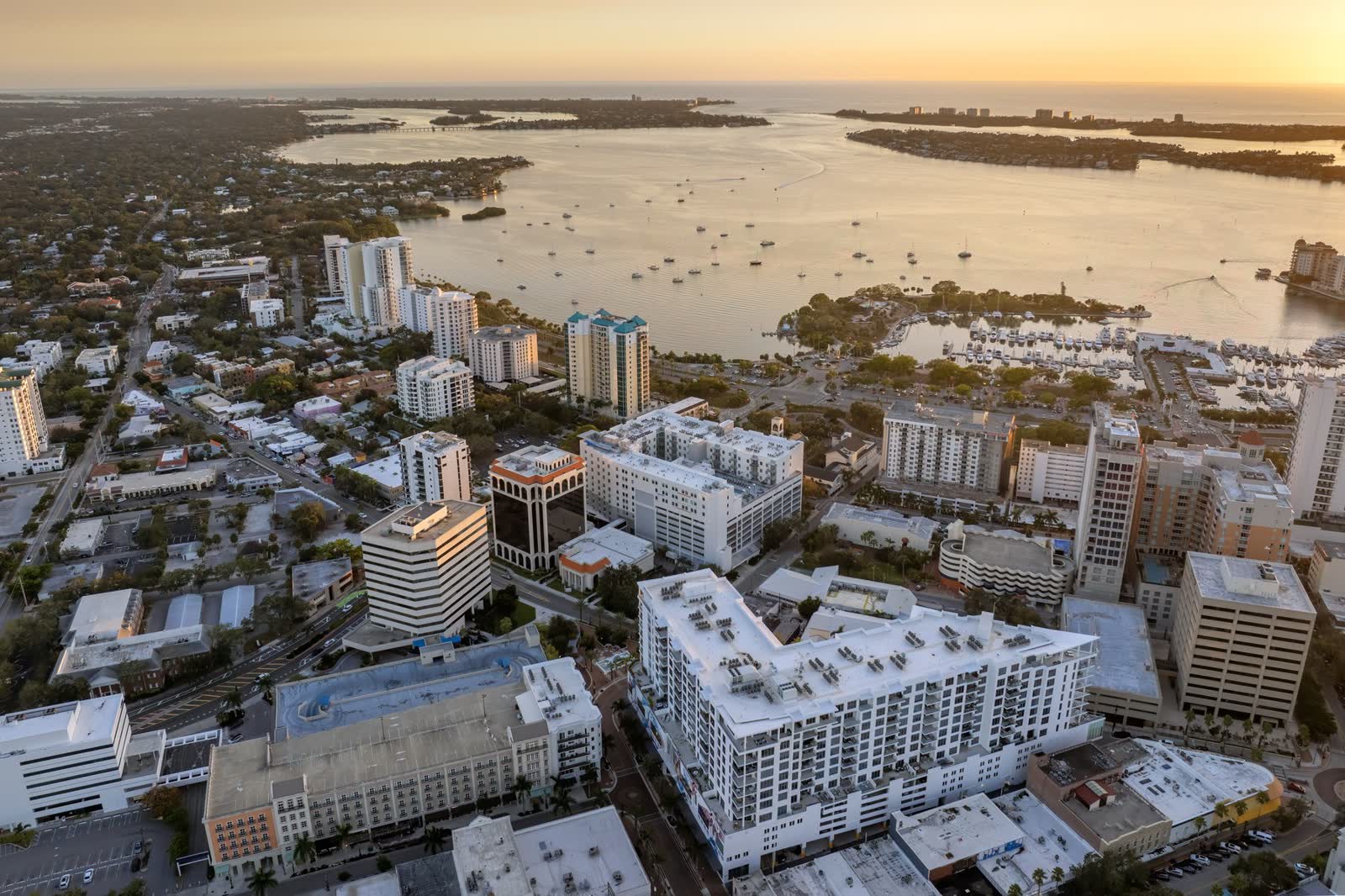
Cataract Surgery in Sarasota–Bradenton
← All Guides
The complete 2026 guide to

Cataract Surgery in Sarasota

Overview

What is cataract surgery?

Cataract surgery replaces your eye's clouded natural lens with a clear artificial intraocular lens (IOL) to restore vision.

It is one of the most common and well-studied procedures in medicine, usually done as a quick outpatient surgery on one eye at a time. In the Sarasota-Bradenton area most cataract surgeons offer both standard monofocal lenses (typically covered by Medicare and insurance when the cataract is visually significant) and premium upgrade lenses that carry added out-of-pocket cost. Laser-assisted (bladeless) technology is widely available locally.

Options & pricing

Your options.

Standard monofocal IOL

A single-focus lens that corrects distance vision; most patients still use reading glasses afterward. Generally covered by Medicare/insurance for a medically significant cataract.

Most common, lowest out-of-pocket Often covered by insurance (copay/deductible may apply)
Toric IOL (astigmatism-correcting)

A monofocal lens designed to correct astigmatism for sharper distance vision without glasses for distance.

Premium upgrade, usually not fully covered $1,000-$2,500 added per eye
Multifocal / EDOF premium IOL

Advanced lenses that aim to reduce dependence on glasses at multiple distances (near, intermediate, distance).

Premium upgrade; suitability varies by eye $2,500-$4,500 added per eye
Laser-assisted (bladeless) cataract surgery

Femtosecond laser performs key steps of the procedure; often paired with premium lenses.

Elective technology fee $1,000-$3,000 added per eye
Typical Sarasota pricing
Option
Typical range
Notes
Standard cataract surgery (per eye)
Covered by Medicare/insurance; $0-$1,500 out-of-pocket
Out-of-pocket depends on your plan's deductible and coinsurance
Toric (astigmatism) lens upgrade
$1,000-$2,500 per eye
Added to the covered base procedure
Multifocal/EDOF premium lens upgrade
$2,500-$4,500 per eye
Elective; rarely covered by insurance
Laser-assisted technology fee
$1,000-$3,000 per eye
Elective add-on, often bundled with premium lenses
Why consider it

Benefits of cataract surgery.

Can restore clarity lost to a clouded lens
Often improves color vision and reduces glare
Outpatient procedure with a quick visual recovery
Lens options may lessen dependence on glasses
Healing timeline

Cataract Surgery recovery.

Day of surgery
Go home same day
The eye may feel gritty and vision blurry; you will need a ride home.
Days 1 to 3
Eye drops begin
Use prescribed drops, wear a shield at night, and avoid rubbing the eye.
First week
Vision sharpens
Sight typically improves over several days as the eye settles.
Weeks 4 to 6
Full healing
Healing completes and any final glasses prescription can be updated.
Featured

Top cataract surgery doctors.

Browse all ophthalmology doctors →
Risks & complications

What can go wrong.

Infection or inflammation
Endophthalmitis is rare but serious; inflammation inside the eye can occur.
Posterior capsule opacity
Vision can cloud again later, often fixable with a quick laser treatment.
Retinal detachment
An uncommon but serious complication that needs prompt attention.
Residual refractive error
You may still need glasses, and lens power can occasionally be off.
How to choose

Board certification, explained.

A Florida medical license lets a physician practice, but board certification is the signal that a doctor completed accredited residency training and passed rigorous exams in their specialty. Look for certification by the American Board of Medical Specialties (ABMS) member board that matches the care you need — and verify it yourself.

ABMS member-board certification
The ABMS oversees 24 specialty boards (internal medicine, surgery, radiology, OB-GYN, and more). Certification in the relevant specialty — confirmed at certificationmatters.org — is the core credential to look for.
Board certified vs. board eligible
“Board eligible” means residency is complete but the certifying exam is not yet passed; “board certified” is the finished credential. Most boards also require ongoing Maintenance of Certification.
Fellowship & subspecialty training
Additional 1–3 year fellowships add focused expertise (e.g., interventional cardiology, surgical oncology, electrophysiology). Match the subspecialty to your specific condition.
Questions to ask your doctor
  1. Are you board certified by the ABMS board for this specialty?
  2. How often do you treat my specific condition or perform this procedure?
  3. What does the full course of treatment involve, and what are the alternatives?
  4. Will this be covered by my insurance, and what should I expect to owe?
Your questions

Cataract Surgery FAQs.

Is cataract surgery covered by Medicare?+

Medicare and most insurance plans cover standard cataract surgery once the cataract significantly affects your vision. Premium lens upgrades and laser technology fees are typically elective and paid out of pocket. Confirm details with your surgeon and plan.

How long does recovery take?+

Many people notice clearer vision within a few days, with full healing over several weeks. Most patients return to light activities quickly, but follow your surgeon's restrictions on lifting, swimming and eye rubbing.

Will I still need glasses after surgery?+

With a standard monofocal lens, most people still use reading glasses. Premium lenses can reduce glasses dependence, but no lens guarantees you will be glasses-free. Discuss realistic expectations with your surgeon.

Is laser cataract surgery better than traditional surgery?+

Both approaches have excellent track records. Laser-assisted surgery automates certain steps and is often paired with premium lenses, but it is an elective add-on. Your surgeon can advise whether it offers a meaningful benefit for your eyes.

Can both eyes be done at once?+

In the U.S., surgeons typically operate on one eye at a time, spaced days to weeks apart, to confirm healing and refine the plan for the second eye.

How do I choose a cataract surgeon in Sarasota-Bradenton?+

Look for board certification from the American Board of Ophthalmology, experience with your chosen lens type, and a clear discussion of costs and expectations. Verify current reviews and confirm the surgeon participates with your insurance.

References & sources

Procedure facts on this page draw on authoritative medical sources. Confirm specifics in a consultation.

American Academy of Ophthalmology — EyeSmart ↗National Eye Institute (NIH) ↗
Boards & certification

Choose a board-certified doctor — and verify it yourself:

ABMS — Certification Matters ↗ Look up any U.S. physician’s board certification across all 24 ABMS member specialty boards. Florida DOH — License Verification ↗ Confirm an active Florida license and review any disciplinary history. NPI Registry (CMS) ↗ Verify a provider’s national identifier and registered specialty taxonomy. Medicare Care Compare ↗ Compare clinicians, hospitals and facilities on quality measures.

★★★★★

Ready to find your doctor?

Compare Sarasota–Bradenton's top-rated ophthalmology doctors — vetted, reviewed, and ranked.

See the Top Doctors